
The One Rule That Matters
If your garage door has jumped its track, stop operating it immediately and keep everyone, especially kids and pets, away from the opening until a technician looks at it. That's the rule. The exceptions are narrow: if a car is trapped underneath a door that's stuck halfway open, you can move the vehicle clear without touching the door itself, and if the opener is actively straining against the door, cut power to it right away. Beyond that, leave the door exactly where it is.
What "Off Track" Actually Looks Like
This isn't always obvious. Common signs include:
- One corner of the door hanging lower than the other, so the door sits crooked
- A visible gap between the rollers and the track, or a roller dangling loose
- Grinding, popping, or scraping sounds when the door moves even a few inches
- The door stopping partway and refusing to go up or down smoothly
- A track that's visibly bent, bowed, or pulled away from the wall bracket
Sometimes a door looks almost normal but is just barely hanging on, which is actually the more dangerous situation because it can let go without warning.
How This Usually Happens
A few causes show up again and again:
- Worn or cracked rollers. Nylon and plastic rollers degrade over years of temperature swings between hot inland afternoons and cool coastal mornings, eventually cracking or seizing.
- A bent track. A bumper tap, a bike leaned against it, or someone backing out too fast can knock a track out of alignment in seconds.
- A broken cable or failing spring. When one side of the door loses support faster than the other, the door racks sideways and pops off the track.
- Loose track brackets. Screws and lag bolts can work loose over time, and in older garages near the coast, salt air speeds up corrosion on the hardware holding brackets to the frame.
How Badly This Can Go Wrong
A standard garage door weighs somewhere between 130 and 400 pounds depending on material and size, and the torsion spring system is under enough tension to lift that entire weight. When a door is off track, that tension doesn't go away, it just has fewer places to go safely. If a cable or spring gives way while the door is misaligned, the door can drop suddenly, with enough force to crush fingers, damage a vehicle, or injure a pet underneath. A door that looks like it just needs a firm push back into place can actually be one tug away from a cable snapping under load. This is the main reason DIY fixes on an off-track door cause more injuries than almost any other garage repair.
What to Do Immediately
- Disconnect the opener or unplug it, without pulling, pushing, or forcing the door in any direction.
- Keep the area clear, including the driveway and the space the door swings through.
- Leave the door exactly where it stopped. Don't attempt to lower or raise it by hand.
- Note obvious hazards, like a dangling roller or a visibly snapped cable, but don't touch them.
- Take a few photos if it's safe to do so from a distance. It helps a technician diagnose the problem faster and is useful if you're filing an insurance claim for impact damage.
What Not to Touch
A few things are worth repeating because they're the most common sources of injury:
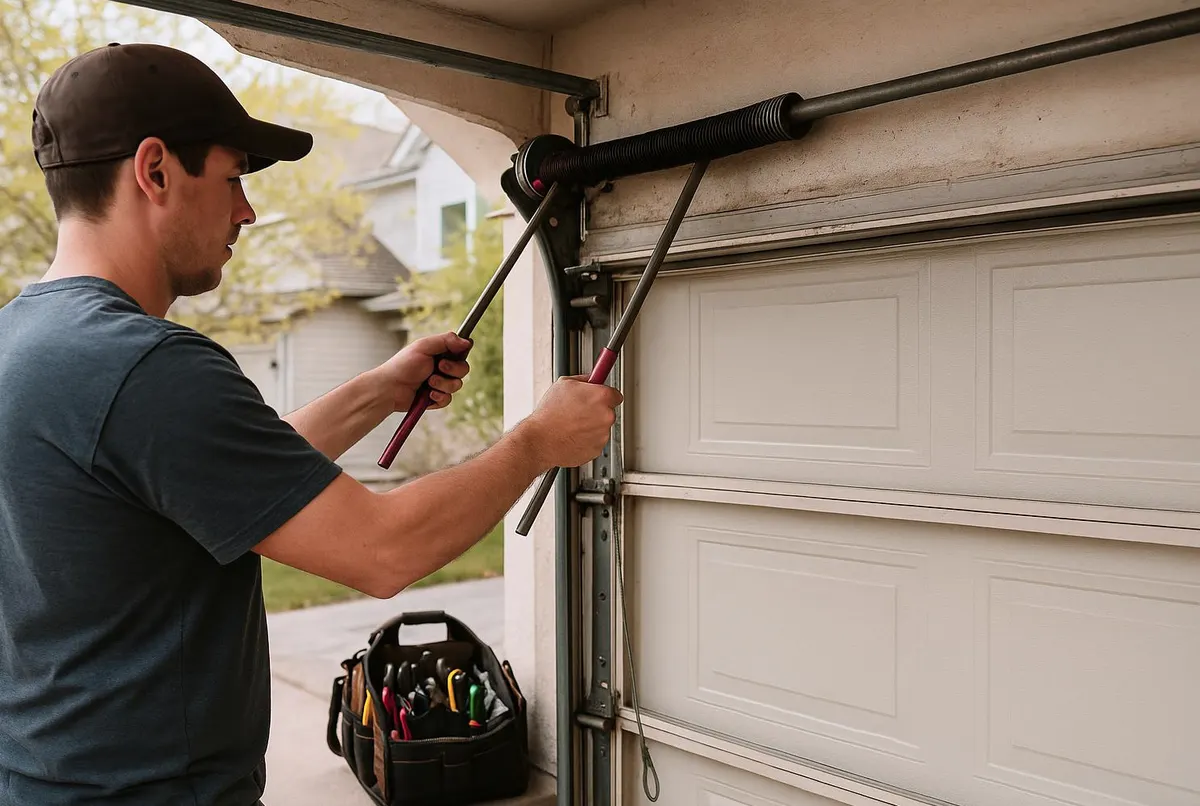
- Never touch the torsion spring, even if it looks intact. The stored energy in a wound spring is enough to cause serious injury if it releases unexpectedly.
- Don't try to re-seat cables yourself. A cable under tension can whip or snap back.
- Don't force the door back onto the track. If it were that simple, it wouldn't have come off in the first place, and forcing it often bends the track further or breaks a weakened roller completely.
- Don't pull the emergency release cord on a door that's already off track and uneven. Releasing it can let one side drop faster than the other, causing the door to tip or fall at an angle.
A Local Factor Worth Knowing
Garages near the coast deal with salt-laden air that speeds up rust on tracks, rollers, and hinge hardware, which is one of the quieter reasons doors drift out of alignment over time. Dry-season dust can also work its way into roller bearings and accelerate wear before a failure becomes obvious. And in some older South Orange County homes, track brackets and spring anchors were installed before current bracing standards, which matters if the house has had seismic retrofit work done elsewhere but the garage door hardware was never updated. None of this means a door will fail on any given day, but it does mean regular inspection catches small issues before they turn into an off-track emergency.
When to Call San Clemente Garage Door
If your door has come off its track, this is exactly the kind of situation our Emergency Garage Door Service is built for. A technician will assess spring tension, check the cables, and determine whether the track is bent or the rollers have failed before touching anything, then re-seat the door safely or replace damaged parts. If the cause turns out to be worn rollers, corroded brackets, or a spring nearing the end of its life, we can also handle Spring Replacement or recommend a maintenance visit so the same failure doesn't happen again in six months. We serve San Clemente, Dana Point, San Juan Capistrano, Laguna Niguel, Mission Viejo, Ladera Ranch, Rancho Santa Margarita, and Oceanside.
If your garage door has jumped its track, don't wait and don't experiment with it yourself. Call San Clemente Garage Door and we'll get it back on track safely, the first time.